MENU
MENU
 MENU
MENU

 Call Us


Get Your Wood-burning Fireplace in Shape
Nothing takes the chill from a room like a wood-burning fireplace. It’s a gift to ourselves that we look forward to every winter – but don’t take it for granted. Even a sturdy fireplace needs a little care to keep us toasty and safe. Keep the fire crackling all winter long with these maintenance tips.
Check Your Chimney
Fireplaces and chimneys require annual check-ups. Have a member of the National Chimney Safety Guild (NCSG) who is also accredited by the Chimney Sweep Institute of America (CSIA), inspect your fireplace and chimney. Professionals with these credentials have the training and experience to properly examine your chimney, preventing possible carbon monoxide poisoning and fire outbreaks.
Check Your Chimney
Beware of Creosote
Beware of Creosote
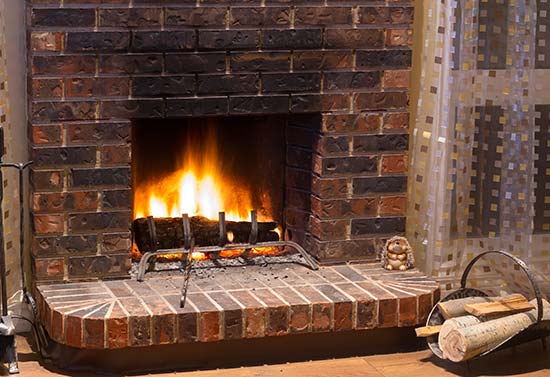
Between your annual chimney check-ups, keep an eye out for creosote – a dark, gummy substance that can build up on chimney walls. Creosote is highly corrosive and extremely flammable so have it cleaned immediately if you come across it.
Reading Smoke Signals
If your fireplace produces excessive smoke indoors, make sure the damper or flue is open wide. This could also be due to a dirty chimney (see creosote above) or nests from birds or squirrels in the chimney cap — all of which can be dealt with by your new BFF, the chimney sweep.
Knock on Wood
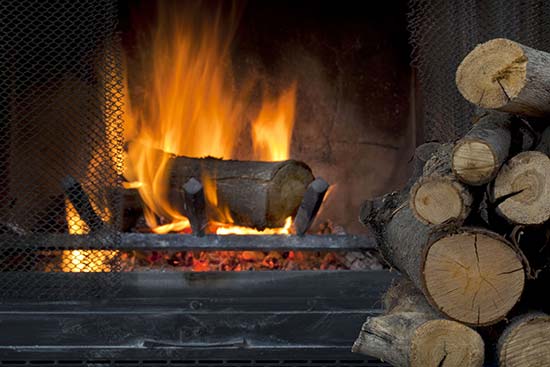
There are two basic types of firewood: hard and soft. Hardwood may cost more, but it’s much kinder to your fireplace. Hardwoods such as ash, birch, maple and oak are more fire-resistant than softwoods like pine, spruce, cedar and fir. Not only does hardwood burn longer, but it produces less creosote and is cleaner to handle because it contains less pitch and sap.
Tend to your fireplace and make sure the chimney is in tip-top shape so that you enjoy many toasty winters to come.
Knock on Wood