MENU
MENU
 MENU
MENU

 Call Us


Anchor Your Art

If you’re lucky, the studs behind your drywall will line up precisely where you want to hang your artwork, shelving or flat-screen television. But given that most walls are framed with studs that are 16 inches apart, it’s far more likely you’ll find yourself somewhere between studs – leaving you somewhere between a rock and a hard place. But don’t despair; the right tool is available to hang almost anything wherever you want.
Picture This: An Easier Way
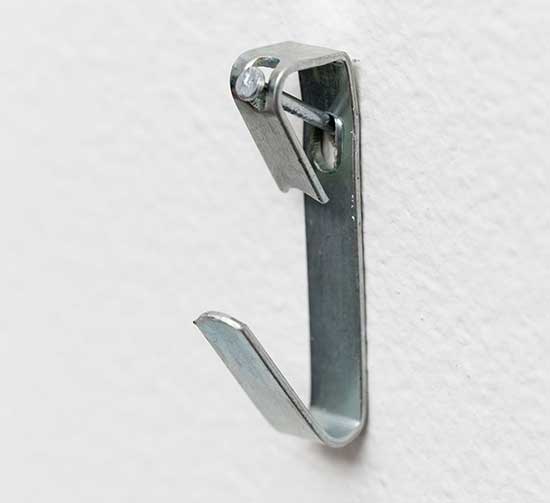
Picture This: An Easier Way
Drywall panels are comprised of gypsum pressed between two sheets of paper backing. Over time, the weight of objects that hang from nails driven into drywall can begin to sag and work free. Picture hangers, on the other hand, are designed to guide the nail into the wall at a steep angle, making it a much stronger alternative to nails. Because of their design, picture hangers can hold a surprising amount of weight – up to 50 pounds of downward force. Another benefit is that they make small holes in the wall that can easily be patched if you need to remove them.
Toggle Between a Heavier Load
If you have been putting off hanging beloved wall décor, mirrors or paintings because of concerns about damage or having enough support, look to a toggle bolt to provide lift. A toggle bolt consists of a long, threaded bolt with a spring-loaded, folding toggle behind the head of the bolt.
After drilling a hole in the wall large enough to accommodate the folded toggle, remove the toggle and guide the bolt through the item that you would like to hang. Rethread the toggle on the bolt’s end and press it through the wall hole until it springs open. The butterfly wings of the spring-loaded toggle will open on the other side of the drywall, maintaining oppositional pressure from the inside and securing your item to the wall.
Toggle Between a Heavier Load
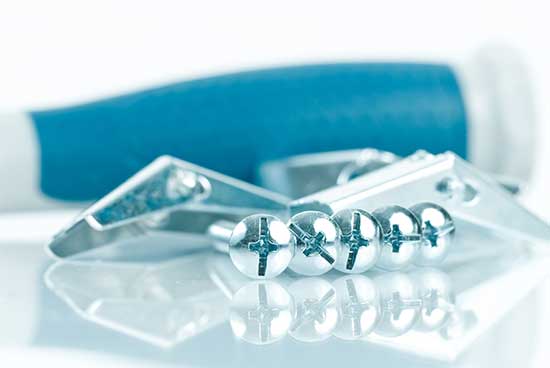
Heavy Duty Jobs Call for Molly
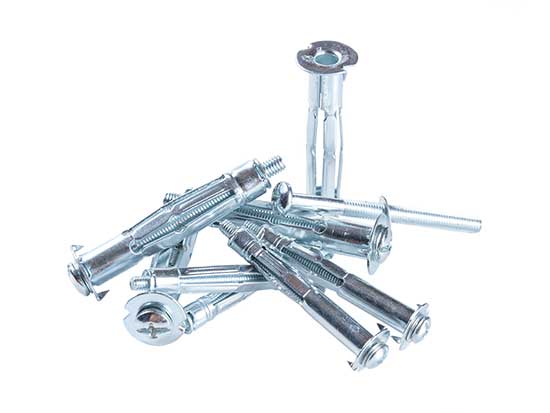
Heavy Duty Jobs Call for Molly
For the biggest jobs, a molly bolt if often an ideal fit. Save this heavy-duty fastener for flat-screen television mounts or central-heating radiators to keep them securely in place. Sheathed in expandable sleeves, molly bolts come in two varieties: the pointed ones that can be tapped into position with a hammer and the non-pointed versions, which are pressed into a hole predrilled into the drywall. The bolt is tightened until the sleeve fully expands against the back of the wall. The bolt is then removed and reinserted through the item to be hung.
With these quick tips, you can cure any old hang-ups about mounting art, shelves and electronics.