MENU
MENU
 MENU
MENU

 Call Us


The Non-electrifying Power of GFCIs

When electricity powers our appliances, its sole objective is to find a path to the ground, often with the help of water. Therefore, blow-drying your hair in a wet bathroom or blending a smoothie on a wet kitchen counter has the potential to create a dangerous situation if electricity surges and flows through your body on its way to the ground. Thankfully, these ground faults are avoidable with ground-fault circuit interrupters (GFCIs), which stop power surges before they can cause serious injury.
With Great Power Comes Great Responsibility
With Great Power Comes Great Responsibility
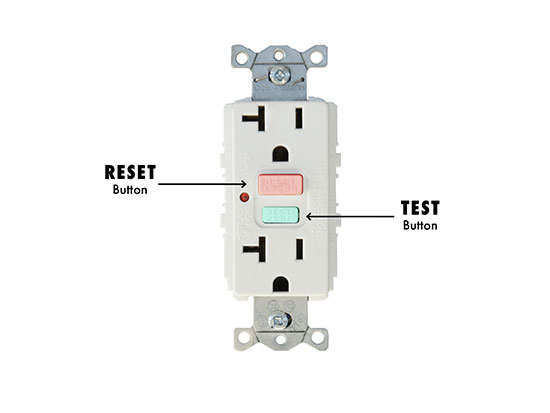
The two buttons on the face of a GFCI outlet are labeled “test” and “reset.” By pressing the “test” button, the flow of electricity is interrupted, and the power is shut off for that outlet. Pressing the “reset” button restores the power. It is recommended that you test your GFCIs once a month to confirm they are functioning properly. Any GFCI that fails this test should be replaced immediately.
Don’t Be Shocked
Standard outlets without buttons may be connected to the same circuit as a GFCI and provide the same function. To confirm that a standard outlet is on a GFCI circuit, plug in a radio or hairdryer and turn it on. Then find the nearest GFCI outlet in your home and press its “test” button. If the radio or hairdryer shuts off, then the standard outlet is protected. If the radio or hairdryer does not turn off, go to the next GFCI in your home and repeat the test. If you find that none of your GFCIs control the standard outlet, replace the outlet with a GFCI. If you find that none of your GFCIs control the standard outlet, then you can replace the outlet with a GFCI.
By ensuring your home has GFCI outlets, you can better protect yourself from electrical mishaps and not leave yourself open to the risk of being in for a shock.